
 English
 العربية
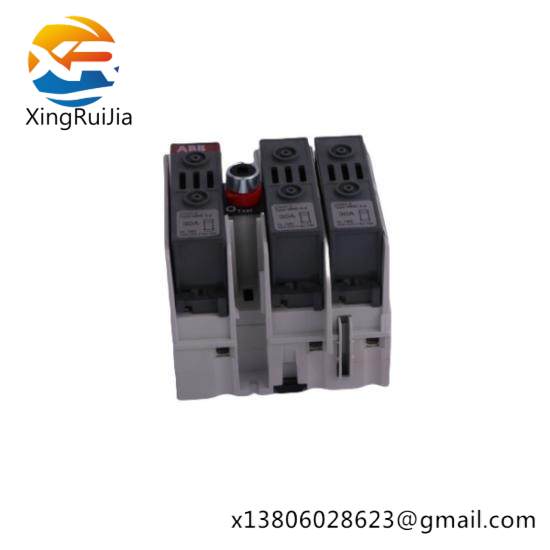

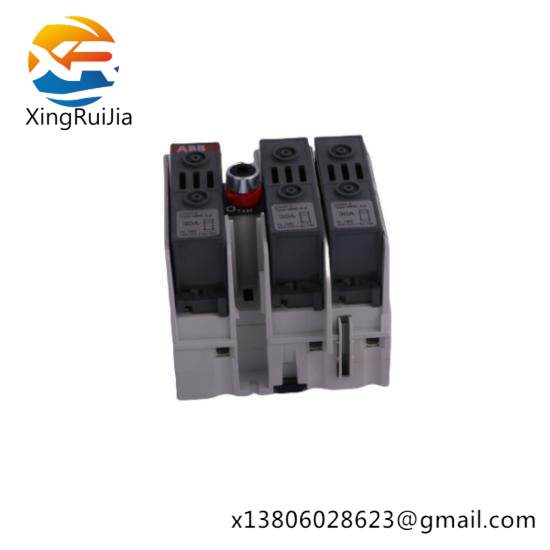
ABB MUGU-510124
Manufacturer:ABB
Model Number:MUGU-510124
Application Category:Digital Control Systems
Part Type:Spare Component
Compatibility:With ABB‘s latest DCS systems
Material:High-grade aluminum alloy
Operating Temperature Range:-40°C to +70°C
Power Consumption:Less than 10W
Dimensions (LxWxH):150mm x 100mm x 30mm
Weight:0.2kg
Connectivity:RS-485, CANopen
Product Details
The ABB MUGU-510124 DCS Spare Part is engineered to meet the stringent demands of modern industrial control systems. Its robust construction and advanced communication protocols ensure compatibility and efficiency across a wide range of automation applications.
Featuring an aluminum alloy body with a protective corrosion-resistant coating, this spare part is designed to withstand harsh industrial environments, guaranteeing long-term reliability and minimal maintenance requirements.
With 8 input and 6 output channels, the MUGU-510124 provides flexible connectivity options suitable for various control tasks. Its versatile power supply and broad temperature range make it suitable for deployment in diverse global settings.
Supporting both Modbus RTU and Ethernet TCP/IP communication protocols, this DCS spare part seamlessly integrates with existing systems, facilitating smooth data exchange and remote monitoring capabilities.
Designed for seamless integration into ABB DCS systems, the MUGU-510124 ensures compatibility with a wide range of operating systems, including Windows and Linux, making it a versatile choice for both new installations and system upgrades.
Main Brand:
ABB Allen-Bradley Alstom Bently GE MOOG Schneider Woodward HIMA Honeywell Emerson Foxboro
Annual hot selling advantage products:
ABB PM856AK01 ABB PM866 ABB UAC317AE
ABB UAC318AE ABB KUC720AE01 ABB 3BHB003431R0101
First hand source, affordable price. Spot inventory!
•Shipping Port: Xiamen
•Ship to you via Fedex/DHL/TNT/UPS/EMS
•Package: Original packing with cartons
Our Main Brands
DCS/PLC/TSI Manufacturers:
ABB, GE, Allen Bradley, Honeywell, Emerson, Bently Nevada, Prosoft, Siemens, Westinghouse, Triconex, Foxboro, ICS Triplex, Hima, Schneider, Yokogawa, Woodward, B&R, KEBA, etc.
Product Categories & Models
1. Distributed Control System (DCS)
- ABB:3AUA0000110429, SYSCON2 746924
- Invensys Foxboro:FBM214, FBM242, B0123HE
- Invensys Triconex:3625, 3700A, 3604E
- Woodward:5462-758B
- HIMA:F2-DO-16-02, F8650E
- Yokogawa:SAI143-S03 S1, F9342L-02
- Honeywell:51402497-200, 51403519-160, 51199194-100, CC-PDO801
- Emerson:KJ4001X1-NB1, 12P3368X012
2. Programmable Logic Controller (PLC)
- Rockwell/Allen Bradley:1734-IB8, 1734-OB8, 1769-L18ER-BB1B, 1756-IM16I
- ICS Triplex:T8461, T8850, T8403, T8431, T8831, T8310
- Schneider Modicon:140DDI85300
- GE Fanuc:IS210AEPSG2B, IS220UCSAH1A, IS215ACLEH1A, IS210AEAAH1B
- Siemens:6ES7331-1KF02-0AB0
- Prosoft:MVI46-DFNT
- Bachmann:MPC240
- Woodhead:9905-068 2301A
3. Turbine Supervisory Instrumentation (TSI)
- Bently Nevada:3500/22M, 138607-01, 3500/25, 3500/53, 3500/32M 149986-02
- EPRO:MMS6110, MMS6120, MMS6220, MMS6312, MMS6410, 6423, 6424
- ENTEK:EK C6622HS, XM124, 1440-SDM02-01RA
What is a DCS?
A Distributed Control System (DCS) is a sophisticated, computer-based control system designed to automate, monitor, and manage complex industrial processes. It is widely used in large-scale industrial facilities such as refineries, power plants, chemical plants, and paper mills, where precision, reliability, and scalability are critical.
How Does a DCS Work?
A DCS is composed of several interconnected components that work seamlessly to ensure efficient process control. Here’s a breakdown of its key elements:
- Controllers:
These are the “brains” of the system. Controllers receive data from sensors, process it using pre-programmed logic, and send output signals to actuators to maintain optimal process conditions. - Sensors:
Sensors act as the “eyes and ears” of the system, measuring critical physical parameters such as temperature, pressure, flow rate, and level. This real-time data is essential for accurate control. - Actuators:
Actuators are the “muscles” of the system. They execute physical actions based on controller commands, such as opening/closing valves, starting/stopping motors, or adjusting dampers. - Operator Stations:
These serve as the human-machine interface (HMI), allowing operators to monitor the process, adjust setpoints, and troubleshoot issues. Modern DCS systems often feature intuitive graphical interfaces for ease of use. - Communication Network:
The backbone of the DCS, this network connects all components, enabling seamless data exchange and coordination. It ensures that every part of the system works in harmony, even across large industrial sites.
Why is a DCS Important?
- Centralized Control with Distributed Execution: A DCS allows for centralized monitoring while distributing control functions across multiple controllers, reducing the risk of system-wide failures.
- Scalability: It can easily expand to accommodate growing operational needs.
- Reliability: Redundant systems and fail-safes ensure continuous operation, even in critical environments.
- Efficiency: Optimizes processes, reduces waste, and improves overall productivity.



There are no reviews yet.